
BOOKENDS THEME
WAYS OF TROPICAL BEING

Time it was, and what a time it was,
it was…
a time of innocence,
a time of confidences.
“Bookends Theme”, Paul Simon
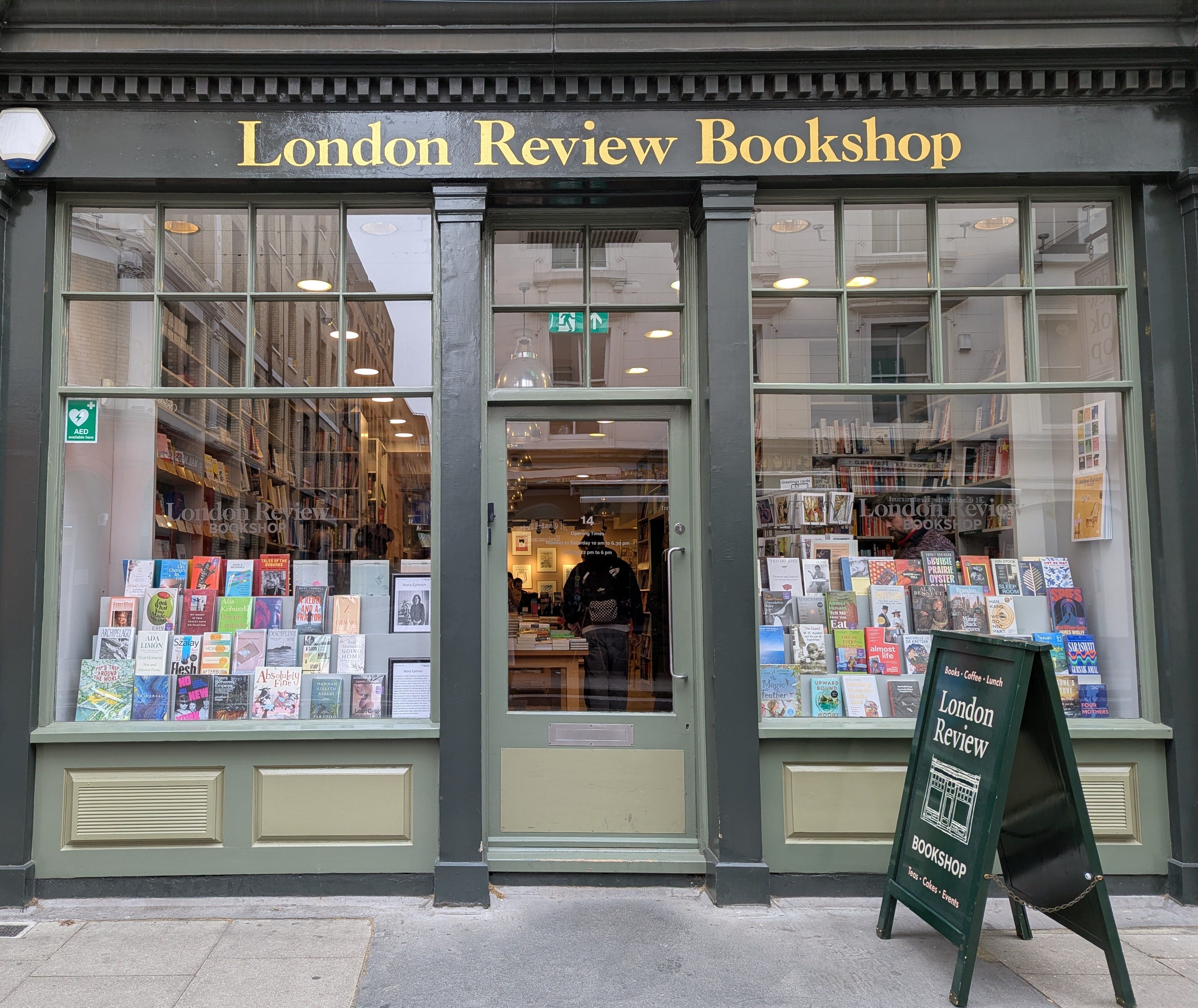
Twice in two days my girlfriend and I walked there together, a good way in the brisk weather, through a narrow passage opposite Bloomsbury Square, into a secluded courtyard where cordon bleu trainees smoked in white double-breasted jackets with eponymous blue piping. Around the bend it stood there like a gingerbread house from a fairy tale. I’d have returned again on the third day, but Easter was a week past, my flight departing tomorrow and last minutes had to be filled fast.
What pulled me back to the London Review Bookshop?
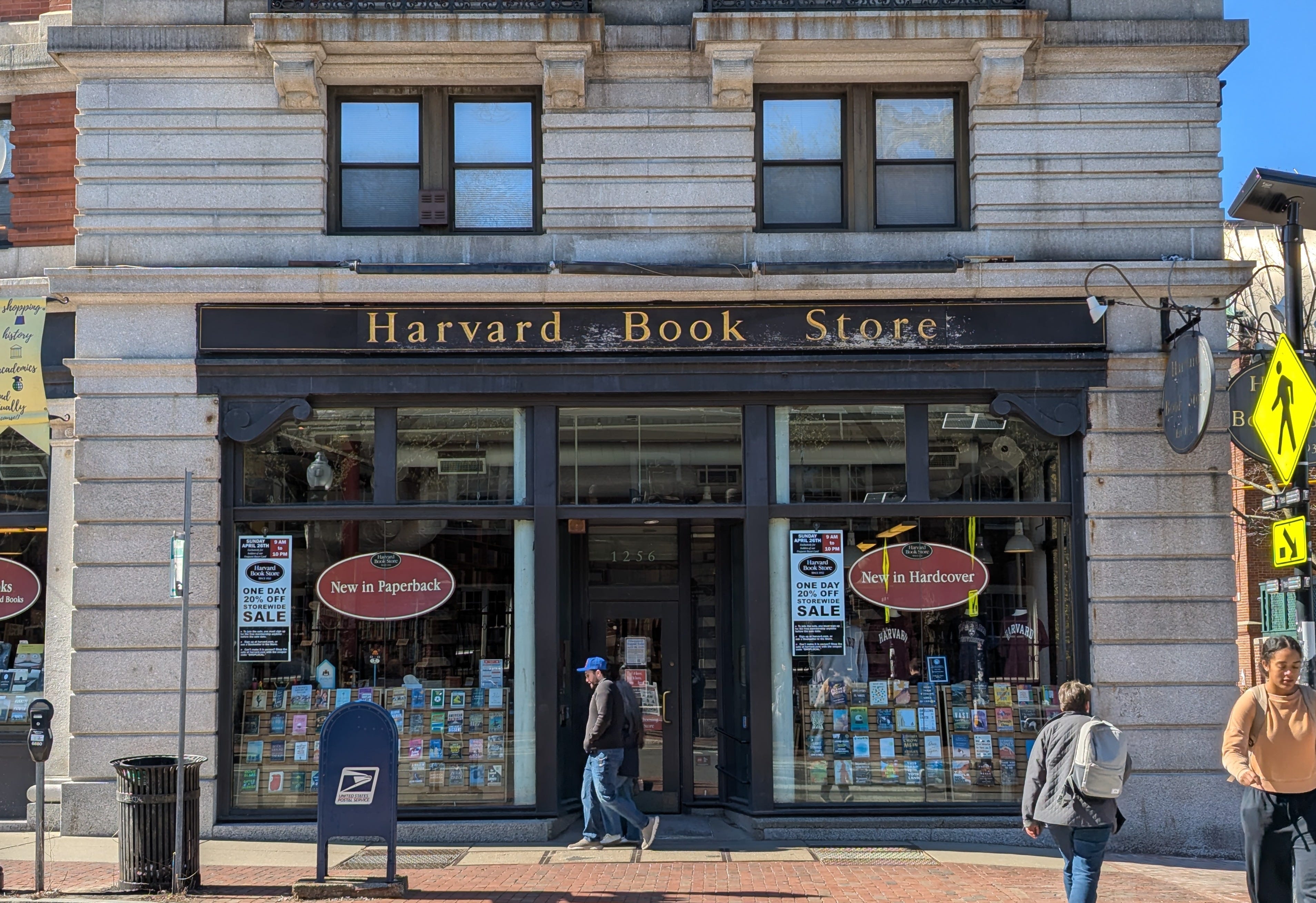
From outside for a second, no more, it seemed a smaller version of the Harvard Book Store that I’m familiar with in Cambridge (Massachusetts) and shall henceforth refer to as HBS. They share a similar old-fashioned wood facade framing a single door. Their names are lettered in a similar old-style, gold serif, The Harvard t-shirts in one show window, however, and Warehouse Sale ads are a dead giveaway which is in the US and which isn’t. Only books are displayed behind the glass of the other establishment. Interestingly, what I’ve always known as a “bookshop” is in the US referred to as a “book store”, which again indicates something.
She wasn’t persuaded, and reminded me of my first entry into the HBS. “I can’t stay in here,” I said after a few minutes: all those gorgeous books at my fingertips - not helter-skelter like the Strand’s “18 miles” of brand-tub book bargains (amongst which I used to spend many happy hours in Manhattan years ago) nor B&N’s five floors two blocks away. I was overwhelmed by sadness that I no longer felt joyful to be surrounded by so many HBS shelves of enticing, inviting paperbacks and hardcovers, tables of new arrivals and remainders.
Nestled in its discreet London courtyard the LRB probably offered nothing not available in the larger, more comprehensive Cambridge store; nothing but a vibe, that is… which is everything.
The small Bloomsbury bookshop was literary without compromise. No textbooks, not even university textbooks; no bestsellers, celebrity bios or self-help manuals; no sci-fi, fantasy, romance or young adult sections. There seemed to be no tourists (other than us).
The Japanese have a concept of philosophic forest bathing or shinrin-yoku, which entails immersing yourself in nature, no devices, no strenuous hiking, just slowly and mindfully engaging all your senses, soaking it all in. In the LRB, for the first time in years, I could once again book bathe.
Even the paperback covers in the LRB seemed different, more aesthetic than American advertorial designs, although that might be my imagination. They recalled my adolescent love for the Penguin covers that introduced me to modern artists - Paul Klee on the cover of Herman Hesse’s Steppenwolf, José Clemente Orozco on Marquez’s One Hundred Years of Solitude, and Fernand Léger on Aldous Huxley’s Brave New World. Those days I knew the original names of books that I'd read in translation. Strait is the Gate by André Gide, for instance, was originally La Porte Étroite, which my sister studied for French A-levels and more accurately translates as the narrow gate. Mario Vargas Llosa’s The Time of the Hero, which I loved, was originally La Ciudad y los Perros - the city and the dogs.
The LRB swept me back to that time of discovery and wonder. It revived the younger, more quixotic boy I once was, when the smell of a new book was heady and the idea of a good bookshop a dream (there were none in Trinidad). The LRB even exuded the subtle fragrance of highbrow snobbery so appealing to a teenage outcast.
Once upon a time Harvard Square boasted several book stores but over the years they were displaced and the district has since become dominated by banks. Students rarely read books nowadays anyway and the HBS would have gone under too if dedicated bibliophiles and indie bookstore supporters hadn’t picked up the baton. It was related only in name to the surrounding campus whose in-house “book” store seemed stocked mainly with branded merch - T-shirts, scarves, bags, rings: I didn’t care for more than a fleeting glance at the display.
Around the corner from the HBS was another whiff of a past that was more in keeping with the LRB: Leavitt & Peirce, a narrow, slightly dark and masculine and deliberately retro emporium offering loose tobacco, pipes and cigars; playing cards and tarot decks; go, backgammon and chess sets; wallets, penknives and shaving cologne; and at $1 each - what I go there for other than the aromatic ambience - beautiful, wooden, cigar boxes containing only their fragrance.
The world is changing today at a dizzying pace, and so am I, declining faster than I can lower my standards. I can no longer smoke. I mainly listen to music when driving alone and even then I more often opt for a podcast. My latest book, The Illustrated Story of Pan Second Edition, published in 2021, was already a swan song. Its meditation on photography as an irrefutable truth-teller - a moment of reality swiped from time’s flow and mounted on gelatin silver - does not still hold water. Long before publication Photoshop put paid to that. Pan, its subject - like rock ‘n’ roll records in beautiful album jackets - has long ceased being a passion of the people. Paper, the medium of choice since Gutenberg printed his bibles, is no longer the sole or even the main material for the preservation or mass reproduction of images. Books such as I write are not the primary or even secondary go-to resource for knowledge. I’ve stopped collecting them, at least hard copies, as I stopped collecting vinyl LPs, then CDs and finally, a little over a decade ago, DVDs. I have given away all my records and DVDs, most my CDs, and boxes of books. My daughters, like other children of my generation’s book lovers, aren’t obsessed with starting collections as we once were.
I still read - or rather, skim - books; mostly in digital format now, although I sometimes possess them printed on paper. E-books are more convenient and more portable - my kindle contains an entire library. If I’m quoting from one it’s easier to search and find and, because I write mostly digitally, cut and paste. And they’re more available (in Trinidad) and much, much cheaper, especially when free. Alas, skimming words, and digital ones at that, means I absorb less than less.
None of those concerns mattered inside the almost spiritual silence of the LRB, however. Behind its green door was a purer world populated with mostly (fiction) writers of intellectual and moral integrity. Poking happily around I encountered Han Kang’s collection of poetry, photographs and diary entries entitled Light and Thread. I’d never heard of her before although she was a Nobel laureate. Akutagawa Ryūnosuke was a stranger to me too, even though I loved the classic Kurosawa movie based on his Rashomon and Seventeen Other Stories. Rebecca Solnit’s River of Shadows and Lavina Greenlaw’s The Importance of Music for Girls piqued my curiosity. And because I’d come and planned to return home on foot I picked up A Philosophy of Walking by Frédéric Gros:
Walking is the best way to go more slowly than any other method that has ever been found. To walk, you need to start with two legs. The rest is optional. If you want to go faster, then don’t walk, do something else: drive, slide or fly. Don’t walk. And when you are walking, there is only one sort of performance that counts: the brilliance of the sky, the splendour of the landscape. Walking is not a sport.
My girlfriend, who on shorter legs walks faster than I do - all loco and no motive, I tease her - got Viet Thanh Nguyen’s fat, Pulitzer-winning The Sympathizer and Girl, Woman, Other by Bernardine Evaristo, who was awarded the Booker for it.
Every lover seeks the flourishing of the beloved and that applies equally to those who love books and by extension bookshops. It’s why she won’t use Amazon - because it has undercut and forced the closure of many book stores, especially the small, independent ones. It’s why the HBS was bailed out - because love is about giving, not getting. It’s why I became a writer. Of course a lover also wants to be loved in return, which may not happen. Either way, for better or worse, I am a writer and if that sometimes seems sadly quixotic, in the LRB my bibliophilia reminded me of the idealism of my youth, which was a magical time of endless possibilities. Surely that’s the appeal of books, the chance to temporarily inhabit ever new and different lives and experiences?
Walking home from the LRB I marvelled at the innocence of people as young as I once was. I could weep for their confidence that anything is possible and the world could be changed for the better. It shone in the students who occupied Columbia and other universities two years ago. Given the enormous costs of university education, the loans many of them would have had to repay for the next twenty years, putting their careers on the line for the Palestinians in Gaza was a noble and heroic act. Standing against the genocidal juggernaut of global Zionism those students represented the best of the US.
People still buy books, she said. I agreed. It’s not the end of book, only the end of the idea that widespread literacy would make everyone well-read and thoughtful. If the number of book-lovers hasn’t increased, I don’t think, neither has it decreased, at least not until the recent rise of smartphones and the social media brainrot they’ve habituated us to. Book people are the same as they ever were - a tiny minority of renegades, castaways, wannabes and mariners. Sad as the times may be they aren’t the book’s end.
...Long ago it must be
I have a photograph
Preserve your memories
They're all that's left you...
You library has gone digital but I was going to invite you to glance over your recently deceased cousin's bookshelves for any tomes that might peak your interest, before the contents are consigned to a paper recycling facility.